
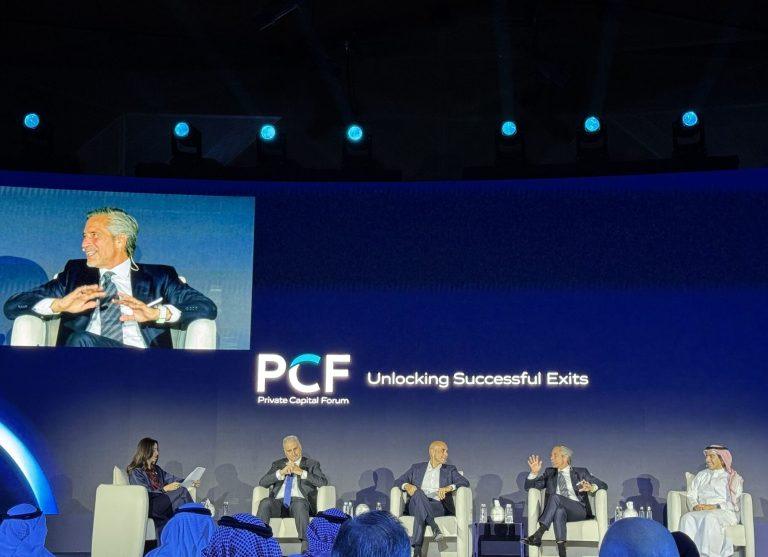
Dany Farha recently joined a panel on exit strategies at the 2025 Private Capital Forum in Riyadh, with Abdulaziz Alomran (Impact46), Muhannad Qubbaj (Olive Rock Partners), Walid Majdalani (Investcorp Capital), moderated by Al Arabiya’s Fatima Daoui.
Category Leaders Don’t Wait for Exits, They Create Them
Dany’s message to the audience was direct: enduring exits are built on the back of enduring companies.
“You don’t build to sell. You build so well that people line up to buy.”
He explained that the correlation between the expected buyer at the time of investment and the actual buyer at exit is “close to zero.” Over a 5 to 10 year horizon, markets shift, business models evolve, and new acquirers appear. The only constant is quality – resilient, profitable, defensible category leaders.
That’s why BECO’s philosophy centers on building optionality, not dependency on any single exit path.
Exits Are a Process, Not an Event
For early-stage venture capital firms, exits aren’t a one-off moment – they’re a continuous process.
As Dany outlined, BECO manages DPI (Distributions to Paid-In) and IRR (Internal Rate of Return) through programmatic liquidity: selling down positions as portfolio companies achieve predetermined return thresholds.
This model demands transparency with founders from day one. Liquidity events are driven by the fund’s structure, not by a lack of conviction. Founders remain supported while BECO ensures responsible returns for its LPs.
The Exit Toolkit: Built with the Ecosystem
Over the years, BECO’s exit toolkit has grown alongside the regional venture ecosystem.
The Future: Expanding Exit Pathways
Looking ahead, Dany emphasized that the exit landscape continues to evolve.
Secondaries are becoming more liquid, continuation vehicles are emerging as a sophisticated way to extend ownership, and private equity buyers are increasingly active in taking stakes in high-performing venture portfolios.
Each new mechanism reinforces the region’s liquidity flywheel – giving founders and investors greater flexibility to realize value on their own terms.